From Publishers Weekly
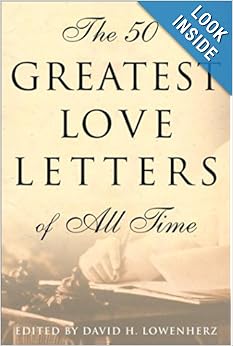
"The act of writing," proposes Lowenherz, "gives us a chance to reflect in private before exposing our heart." Hence the value of the love letter as an abiding expression of the writer's feelings in all their depth and complexity. A prominent collector and dealer in letters and historical memorabilia, Lowenherz presents letters (or fragments thereof) that collectively express the full range of amorous passion, from blind adoration to angst-ridden vituperation. Included are the romantic outpourings of celebrated writers George Sand, Virginia Woolf, Ernest Hemingway, Zelda and F. Scott Fitzgerald whose literary talents make their correspondence a model for any aspiring lover. Perhaps less gifted in their command of language, but certainly no less heartfelt, are selections from such notables as Harry Truman, Abigail Adams, Ronald Reagan, George Bush and an adoring Elvis fan from New Jersey. While reading through too many of these missives in one go might send some readers on an emotional roller coaster, dipping into the collection here and there will be inspiring for those who seek to command the attention of their loved ones. Not surprisingly, some of the most passionate declarations of love herein were uttered by lovers who later proved fickle. But there are some unexpected revelations, too: the ostensibly reserved George Bush, for example, is an effusive epistolary lover. Lowenherz introduces each letter with a quick, helpful biographical note about the author, and the collection as a whole reveals an infinite number of ways to say "I love you." Photos. (Jan.)Forecast: If Crown can generate enough publicity for this, it should be a cinch for literate lovers on Valentine's Day.
Copyright 2001 Cahners Business Information, Inc.
From School Library Journal
Adult/High School-A collector and dealer in letters, manuscripts, and signed photographs has gathered together an anthology showing a diverse, unusual, and not always romantic view of love. A brief introduction to each letter gives some background about the writer and the recipient. Photographs accompany some of the letters. The correspondents include such people as Harry Truman, Jack London, and Sarah Bernhardt. Reading through the letters, readers see vivid examples of how the expression and the language of love have changed over the years. When one considers how e-mail and instant messaging are changing the face of even our most intimate communications, these letters recall a different and sometimes gentler time. Reading some of them will give teens a peek into the private thoughts of people whose names they have seen in books or heard about in class. It might even inspire them to write some letters of their own.
Peggy Bercher, Fairfax County Public Library, VA Copyright 2002 Reed Business Information, Inc.







 If you have a question or problem, visit our


